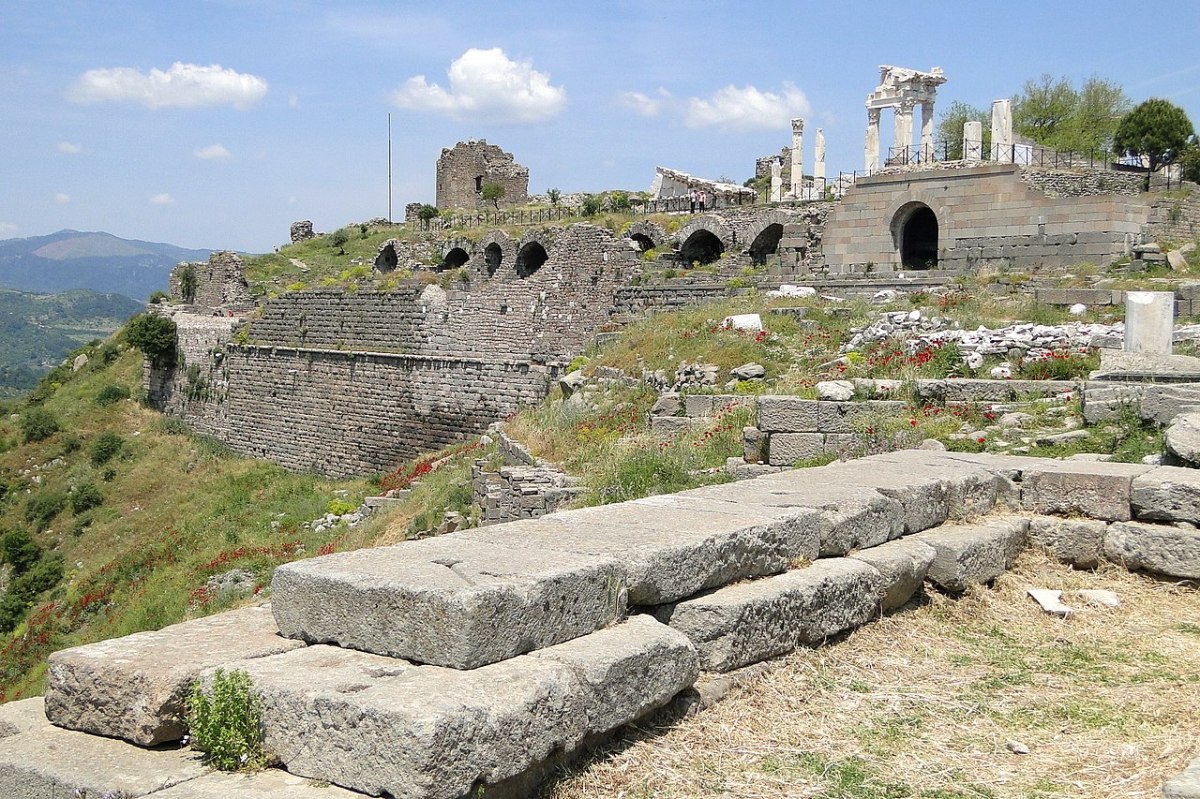
And to the angel of the church in Pergamum write:
The One who has the sharp two-edged sword says this:
“I know where you dwell, where Satan’s throne is; and you hold firmly to My name, and did not deny My faith even in the days of Antipas, My witness, My faithful one, who was killed among you, where Satan dwells. But I have a few things against you, because you have some there who hold the teaching of Balaam, who kept teaching Balak to put a stumbling block before the sons of Israel, to eat things sacrificed to idols and to commit sexual immorality. So you too, have some who in the same way hold to the teaching of the Nicolaitans. Therefore repent; or else I am coming to you quickly, and I will wage war against them with the sword of My mouth. The one who has an ear, let him hear what the Spirit says to the churches. To the one who overcomes, I will give some of the hidden manna, and I will give him a white stone, and a new name written on the stone which no one knows except the one who receives it.”
The next message is to the church at Pergamum. John continues with the basic format of these messages (see Introduction).
Jesus introduces Himself as the “One who has the sharp two-edged sword”. This is not the first time that this description is used. John describes the Jesus he sees in Rev. 1:12-16. In this description, John says, “from his mouth came a sharp two-edged sword”. This imagery is repeated at the end of Revelation. In chapter 19, John describes the battle of Armageddon. He depicts Jesus with this same description:
From his mouth comes a sharp sword with which to strike down the nations…And the rest were slain by the sword that came from the mouth of him who was sitting on the horse (Rev. 19:16a, 21a ESV)
This sword coming from His mouth, then, seems to signify that He has power and authority to simply speak judgment.
Jesus then commends this church for not bowing to the pressures of a wicked city. Pergamum was the capital of the Roman province of Asia. There were many shrines and temples to false gods. This church faced persecution as they stood for the one true God. Jesus recognizes how they held onto their faith through some tough and troubling times. Antipas was the bishop of this church. As a faithful witness for Christ, he was put to death. This did not stop the church. Jesus commends them for their faith.
After giving such a high commendation, Christ then rebukes the church for tolerating sin. Within the church, there was a small group who called themselves “Christians”, yet never truly converted to Christ. They continued the sinful practices of the city around them, namely idolatry. Christ tells the church to repent. His warning is for those who follow Him but tolerate the evil among them. This is applicable today. I have seen churches that, in the name of inclusivity, tolerate all kinds of evil from their congregations, staff, teachers, leaders, etc. They allow this while soft-soaping the gospel to be more sensitive to those who have not yet converted. The church may tolerate this, but God does not. Further, God does not tolerate those who tolerate the sin.
Christ explains what will happen if they don’t repent, “I will come to you soon and war against them with the sword of my mouth.” Earlier, I said that this sword signifies that Christ has the authority to speak out judgment. I think it would be a terrifying thing to know that Christ was about to pronounce judgment. But the way this is phrased makes it appear that this will be a judgment that is sustained for a period of time. Christ doesn’t say that He will strike with the sword of His mouth. No, He says he will “wage war” with the sword.
Again, Jesus makes this message universal by saying, “He who has an ear, let him hear what the Spirit says to the churches.” Christ does not want us to tolerate sin. We all need to guard the gospel within the church and not tolerate false doctrine being taught at any level.
Finally, Christ makes His promise to the overcomers. “To the one who conquers I will give some of the hidden manna, and I will give him a white stone, with a new name written on the stone that no one knows except the one who receives it.” (Rev. 2:17b ESV). In John 6, Jesus explains how He is the bread (manna) of life. The overcomer, then, gets to eat freely of the life that Christ purchased for us at Calvary.
He then talks about a white stone. At the time that this was written, a white stone was used in the court system to signify a vote of not guilty. Christ is declaring all those who overcome to be not guilty. Not only that, but He says the stone will be inscribed with a new name for those who receive it.
Several years back, I met a couple who had adopted four children that had been removed from their parents due to abuse. When they adopted these children, they gave them all new names. They said that these children were coming into a new, loving family, and wanted to symbolically erase the stigma that came with their names.
Jesus offers us adoption into the family of God (see Rom. 8:15, 23; 9:4; Gal. 4:5; Eph. 1:5). Those who overcome will see the fruition of this adoption, complete with a new adoptive name. We are no longer to be known by the stigma of our past, but to embrace the future in the loving care of Jesus!
 Todd's Blog
One thought on “No Compromise”