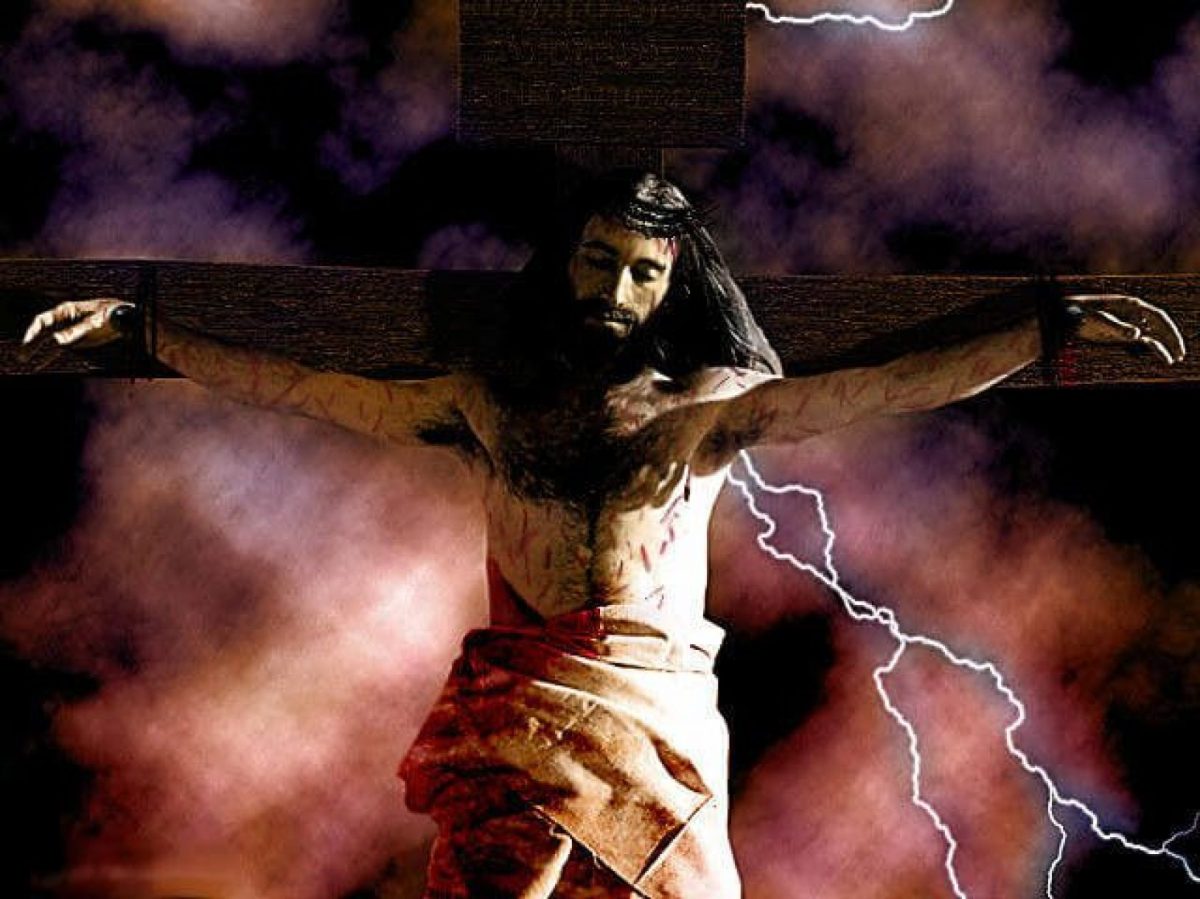
“Jesus, much like the scarecrow, is there for protection. The world views Jesus as hollow and lifeless; however, He is the light of the world for all who have the courage to believe. Jesus on the cross weathered the storm of all mankind’s sins. He stood alone as a gift of love to the world.”
~ Dale Thompson
As I’ve said before, there are many angles from which to view the crucifixion of Christ. This song looks at our savior as a scarecrow. Some may argue that this is a disrespectful position, but I don’t think so. The intent behind the scarecrow was to scare off the birds from damaging crops. Whether it actually worked is not the point, it is the idea that this comparison comes from.
Jesus often spoke in parables. In Matthew 13, He spoke several times about seeds. Let’s look at 2 of these: The Parable of the Sower and The Parable of the Weeds.
In the parable of the sower, the seed is scattered onto various soil types, and the passage describes how the type of soil affects the growth of the seed. The disciples need an explanation, so Christ gives it to them in vv. 18-23. The point most relevant to this discussion comes from v. 23:
But the one sown on the good ground—this is one who hears and understands the word, who does bear fruit and yields: some 100, some 60, some 30 times what was sown.
In the parable of the weeds Christ compares the Kingdom of Heaven to a man who sows good seed in a field. He says that while everyone sleeps, the enemy comes in and sows weeds with the wheat. When the crops sprout, the weeds come up, too. In order to keep from destroying the wheat, the master allows the weeds to grow with the wheat until harvest. Then, he has the laborers harvest it all together, and separate the good from the bad. Again, the disciples fail to catch the meaning of this parable. Again, Christ explains it to them in vv. 37-43. The point most relevant to this discussion comes from vv. 37-39:
He replied: “The One who sows the good seed is the Son of Man; the field is the world; and the good seed—these are the sons of the kingdom. The weeds are the sons of the evil one, and the enemy who sowed them is the Devil. The harvest is the end of the age, and the harvesters are angels.”
In both of these parables, Jesus makes it clear that the seed, and the crop, are His church. This is why He came as the scarecrow. The scarecrow protects the crops from the birds. Jesus protects the church from the enemy. It is interesting to see this parallel drawn in the parable of the sower:
As he was sowing, some seed fell along the path, and the birds came and ate them up.
You, then, listen to the parable of the sower: When anyone hears the word about the kingdom and doesn’t understand it, the evil one comes and snatches away what was sown in his heart. This is the one sown along the path. (Matt. 13:4, 18-19 HCSB)
The birds, or the enemy, can easily destroy the seed of those who are not planted in the right soil. Jesus offers redemption for all that the enemy has stolen and “destroyed”. There is nothing so far broken that the Lord cannot put back together again. His death on the cross assures that. The image of Christ’s death on the cross is also our image of Him as our “Scarecrow,” standing over the field where we are planted to offer protection for His crop.
The next time He comes, it will be to harvest the crop.
“Scarecrow”
By Bride
There you stand, arms out and wide
Like forbidden fruit to the squinting eyes
Gather us together under your almighty wings
Bruise the head and see what tomorrow brings
Scarecrow all alone
Scarecrow bring your children home
Hand to the plow, forgiving multitudes
Give them compassion, why are they afraid of you
Proud at the altar, vain before the throne
If you are blameless throw the stone
Scarecrow all alone
Scarecrow bring your children home
Betrayed by a friend, hung out to dry
Alone in the end, stretched across the sky
Eclipse the sun, they know not what they do
They say if God is love why would He be so cruel
Scarecrow all alone
Scarecrow bring your children home
 Todd's Blog