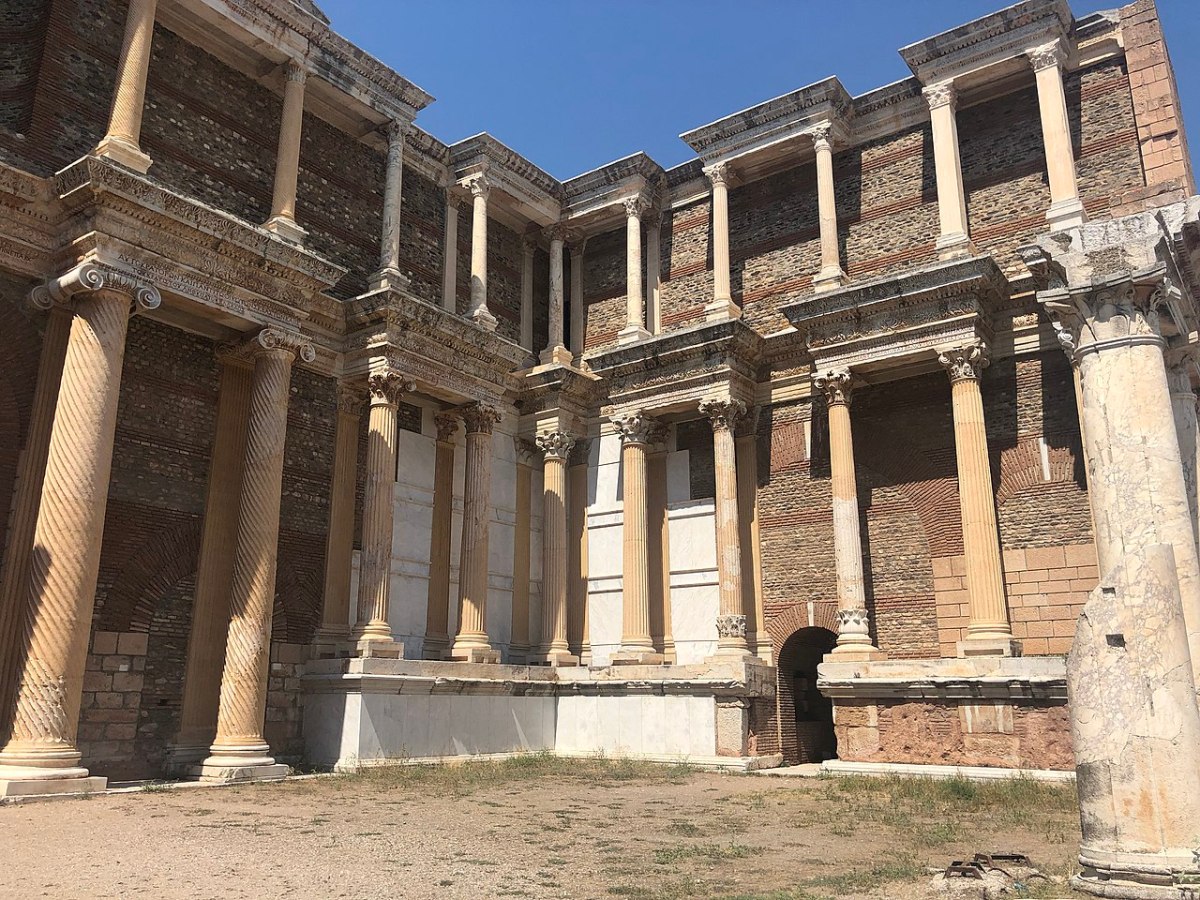
To the angel of the church in Sardis write:
He who has the seven spirits of God and the seven stars, says this: “I know your deeds, that you have a name that you are alive, and yet you are dead. Be constantly alert, and strengthen the things that remain, which were about to die; for I have not found your deeds completed in the sight of My God. So remember what you have received and heard; and keep it, and repent. Then if you are not alert, I will come like a thief, and you will not know at what hour I will come to you. But you have a few people in Sardis who have not soiled their garments; and they will walk with Me in white, for they are worthy. The one who overcomes will be clothed the same way, in white garments; and I will not erase his name from the book of life, and I will confess his name before My Father and before His angels. The one who has an ear, let him hear what the Spirit says to the churches.” (Rev. 3:1-6 NASB)
John’s letter to the seven churches in Asia (The book of Revelation) contains a message directed to each of the seven churches. This letter is known as a circular letter because it was sent on a particular route, making stops at each of the churches. Today, I’m looking at the fifth stop, Sardis.
Jesus identifies Himself as, “He who has the seven spirits of God and the seven stars”. In Rev. 1:20, Christ identifies the stars as the pastors of the churches. But, here, He add that He has the seven spirits of God. This is taken from Isa. 11:2-5, where the spirits are listed as:
- The Lord
- Knowledge
- Understanding
- Wisdom
- Counsel
- Power
- The fear of the Lord
The format of these letters show that after Jesus identifies Himself, He commends the church, rebukes the church, and then promises a reward to the overcomers. However, Jesus breaks from that format by not commending this church for anything. That in itself is especially telling – that Christ has nothing good to say about this church!
The fact that there is no commendation makes the rebuke that much harsher. This church had a reputation. People outside of this congregation thought that they were a spiritual people full of life. However, God sees right through the outward appearances and tells them that they are actually dead (spiritually). Scotty Smith wrote about this, “Her reputation was without reality, her creed without Christ, her religion without relationship.” Jesus goes on to tell them that they still have a few remaining things that have life, but those things were near death. He tells them to strengthen those things.
What does it mean to be spiritually dead? The life of the Spirit is not in them. They did not embody the seven spirits of God. If Christ is living in you and you are influenced by the Holy Spirit, then you can’t be spiritually dead! This church was doing things based on the appearance of spirituality, rather than being influenced by the Holy Spirit.
Coupled with this rebuke is a warning. Jesus says that if they are not alert, He will come as a thief. If you knew when a thief was coming, you would be prepared. Since we don’t know when to expect a thief, we stay prepared or face the consequences. That’s what Jesus is saying. They need to be vigilant, always prepared. Then they won’t have to worry about “the thief”.
Jesus points out that not everyone in this church is guilty. He says that those who have not “soiled their garments” are worthy and will walk with Him in white. Then He makes the promise to the overcomers, “In the same way, the victor will be dressed in white clothes, and I will never erase his name from the book of life but will acknowledge his name before My Father and before His angels.” Anyone who is guilty of this rebuke, yet repents and is victorious, will also be clothed in white. Not only that, but Christ will announce his name to the Father and the angels. This will be like a guest of honor walking into the ballroom. Someone announces his presence so that everyone knows the guest has arrived. Here, Jesus says that He will announce the overcomer so that God the Father and all the angels will know that he has arrived. Perhaps this scene takes place when an overcomer is finished with the earth and shows up in Heaven.
Once again, the opposite is implied. The one who is not victorious will not be dressed in white, Christ will erase his name from the Book of Life, and Christ will not speak his name before the Father and the angels.
This message is concluded with the same remarks that make it universal: “The one who has an ear, let him hear what the Spirit says to the churches.” The lesson that Christ wants Sardis to learn is also intended for everyone.
How is your life characterized? Is your worship alive, true, meaningful? Or, are you just going through the motions of Christianity with no life behind your action?
 Todd's Blog